
Joint Structure and Physiology
An educational examination of how joints are structured, how they function, and the biological components that contribute to joint health and mobility support.
Anatomy of a Joint
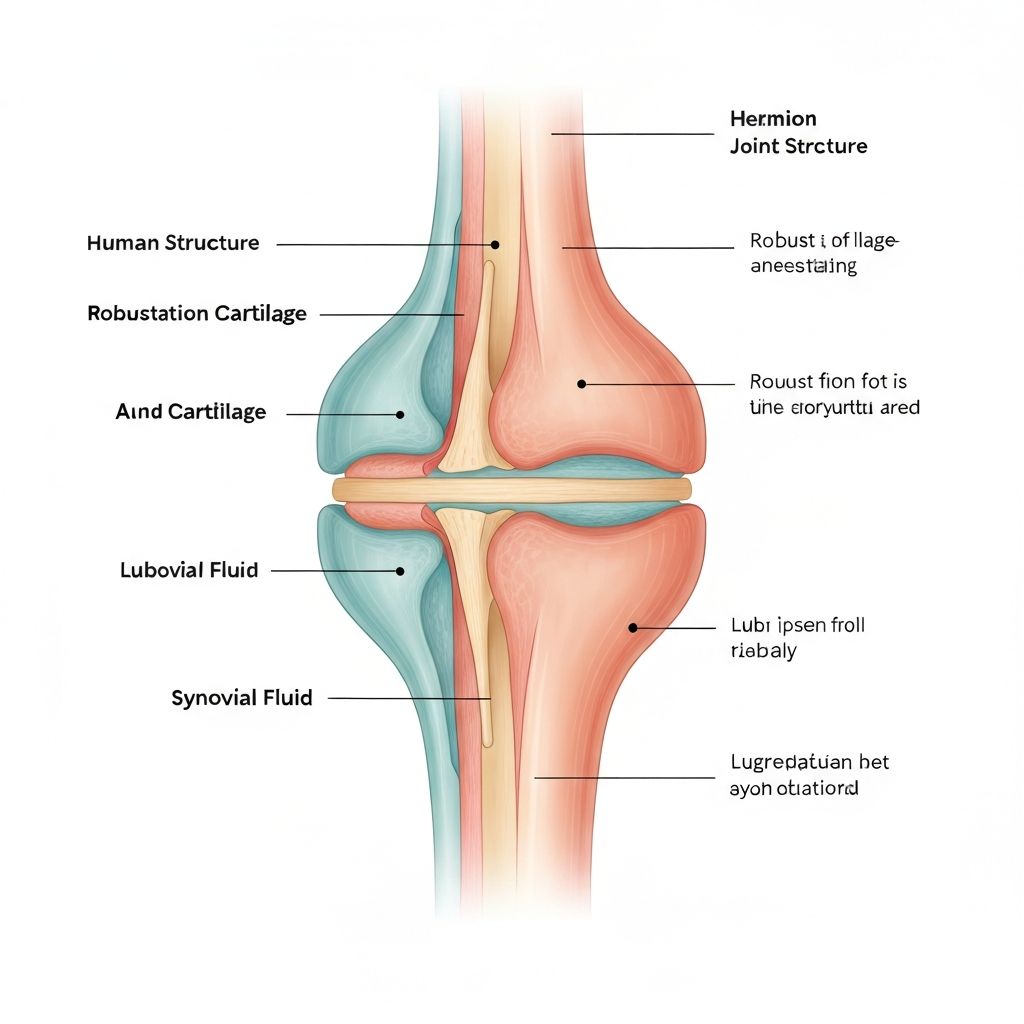
Joints are specialized structures where two or more bones meet, designed to allow movement while maintaining structural stability. A joint consists of multiple components, each playing specific roles in enabling smooth, coordinated motion.
The ends of bones that form a joint are covered with cartilage—a smooth, slippery tissue that reduces friction. The joint is encased in a fibrous joint capsule that provides stability and contains synovial fluid, which lubricates and nourishes the joint.
Ligaments—tough connective tissues—connect bone to bone, providing stability and limiting excessive movement. Tendons connect muscle to bone, transmitting the force generated by muscle contractions to produce movement.
Key Components of Joints
- Articular Cartilage: A smooth, elastic tissue covering bone ends, composed primarily of collagen and proteoglycans. It distributes loads and enables frictionless movement.
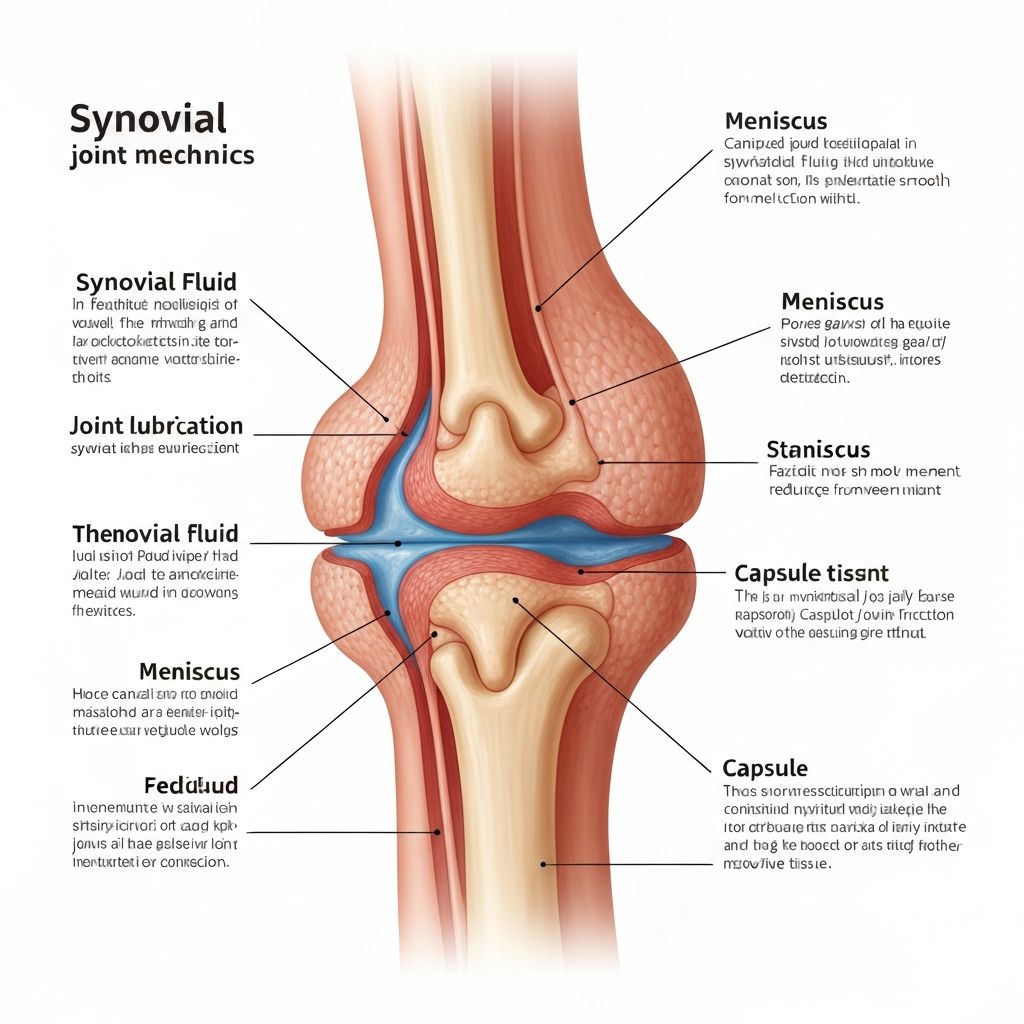
- Synovial Fluid: A viscous fluid produced by the synovial membrane that lubricates joints, reduces friction, and provides nutrients to cartilage, which lacks its own blood supply.
- Synovial Membrane: The tissue lining the joint capsule that produces synovial fluid and absorbs metabolic byproducts from the joint space.
- Joint Capsule: A fibrous structure enclosing the joint, providing structural support and stability while containing the synovial fluid within the joint.
- Ligaments and Tendons: Connective tissues that stabilize joints and enable movement by connecting bones and muscles respectively.
Synovial Fluid: The Joint's Lubrication System
Synovial fluid plays a crucial lubricating role in joint function, reducing friction between cartilage surfaces and enabling smooth movement. Unlike typical oils, synovial fluid's viscosity changes with movement speed—thicker during slow movements and thinner during rapid activity.
Beyond lubrication, synovial fluid delivers nutrients to cartilage, which lacks blood vessels and depends on diffusion from surrounding tissues. It also removes metabolic waste products from the joint space, maintaining an optimal chemical environment.
The composition of synovial fluid includes water, proteins, hyaluronic acid, and various ions. This complex composition is maintained by active processes in the synovial membrane and is essential for joint health and function.
Joint Movement and Mechanics
Different joints in the body have different structures and movement capabilities, allowing for diverse functional requirements.
Hinge Joints
Examples include elbows and knees. They allow movement primarily in one plane, like a door hinge, providing controlled flexion and extension.
Ball-and-Socket Joints
Examples include shoulders and hips. They allow movement in multiple planes, enabling circumduction and rotation through their spherical structure.
Gliding Joints
Found in wrists and ankles. They allow limited movement between flat or slightly curved surfaces, providing stability with some flexibility.
Pivot Joints
Found in the neck. They allow rotational movement around a central axis, essential for head rotation and forearm pronation/supination.
Factors Supporting Joint Health
Physical Activity: Movement stimulates synovial fluid production, maintains cartilage health through appropriate compression and decompression cycles, and strengthens supporting muscles.
Nutrition: Adequate protein provides amino acids for collagen synthesis. Vitamin C is essential for collagen cross-linking. Specific minerals support cartilage matrix components and enzyme function.
Hydration: Adequate water intake maintains synovial fluid volume and viscosity, supporting joint lubrication and nutrient delivery to cartilage.
Weight Management: Appropriate body weight reduces mechanical stress on weight-bearing joints, supporting their long-term health and function.
Educational Information Disclaimer
This article provides educational information about joint structure and physiology. It does not diagnose, treat, or claim to cure any joint-related condition or disease.
Joint health varies significantly among individuals based on genetics, age, activity level, and overall health. Concerns about joint function or health should be addressed in consultation with qualified healthcare professionals.